

Benign Paroxysmal Positional Vertigo (BPPV)When Your World Spins
BPPV can be really scary because it can cause anything from mild to extreme dizziness. Imagine waking up, rolling over in bed, and suddenly feeling as if the room is spinning violently – only to have it stop within seconds when you lie still. This is the reality for millions of people living with BPPV. Affecting up to 2.4% of the general population – and up to 50% of older adults – BPPV is the most common cause of vertigo worldwide. Yet it is frequently misdiagnosed as cervical vertigo, anxiety, or even neurological conditions. The good news? BPPV is highly treatable, often resolving completely with one to three physiotherapy sessions using specific repositioning manouvres.
At PhysioMotion, we have Physiotherapists who specialise in vertigo and balance related issues including BPPV who can provide accurate diagnosis and effective, evidence-based treatment to get you back on solid ground.
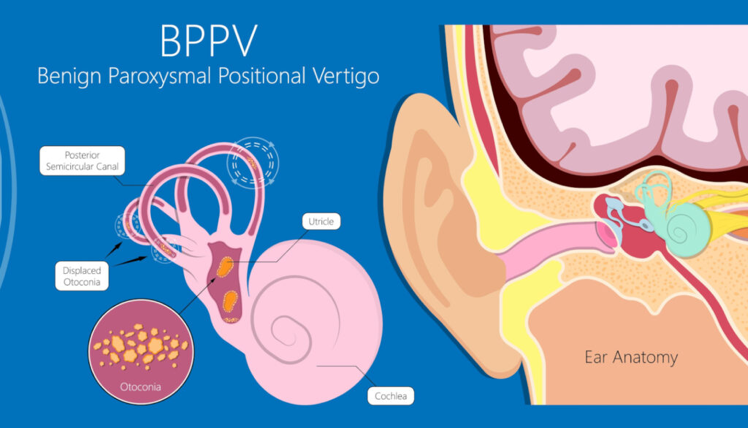
Figure 1: Crystals (octoconia) becoming dislodged
Understanding BPPV
BPPV occurs when tiny calcium carbonate crystals called otoconia (or "canaliths") become dislodged from their normal location in the inner ear's utricle and migrate into one of the semicircular canals. These crystals then move abnormally with head position changes, sending false signals to your brain about your head's movement – causing the sensation of spinning.
Key distinction: BPPV is a mechanical problem - not neurological or vascular. This is why physiotherapy manoeuvres are so effective.
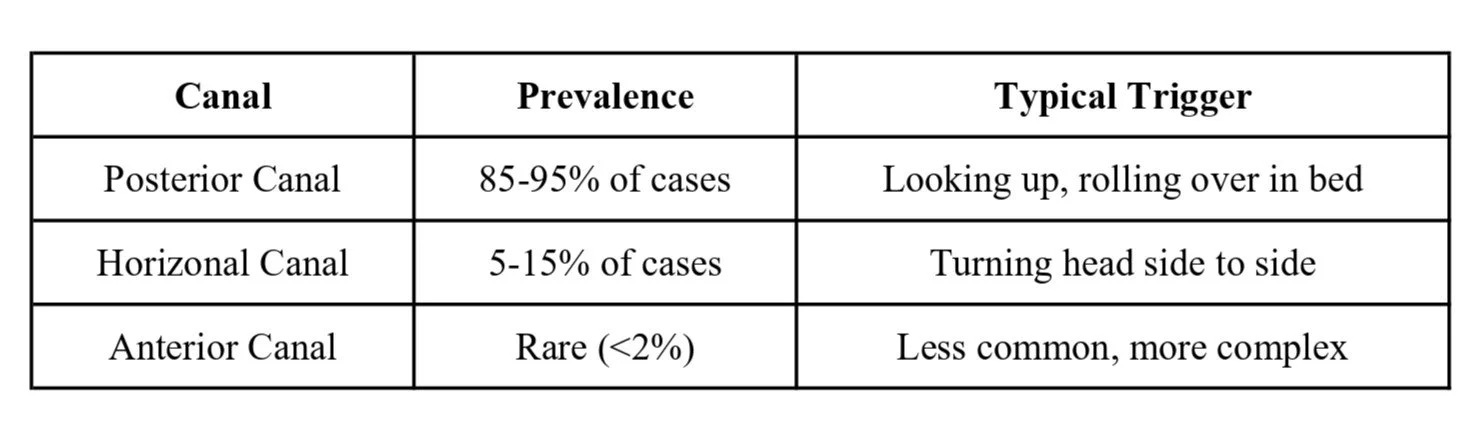
The Semicircular Canals
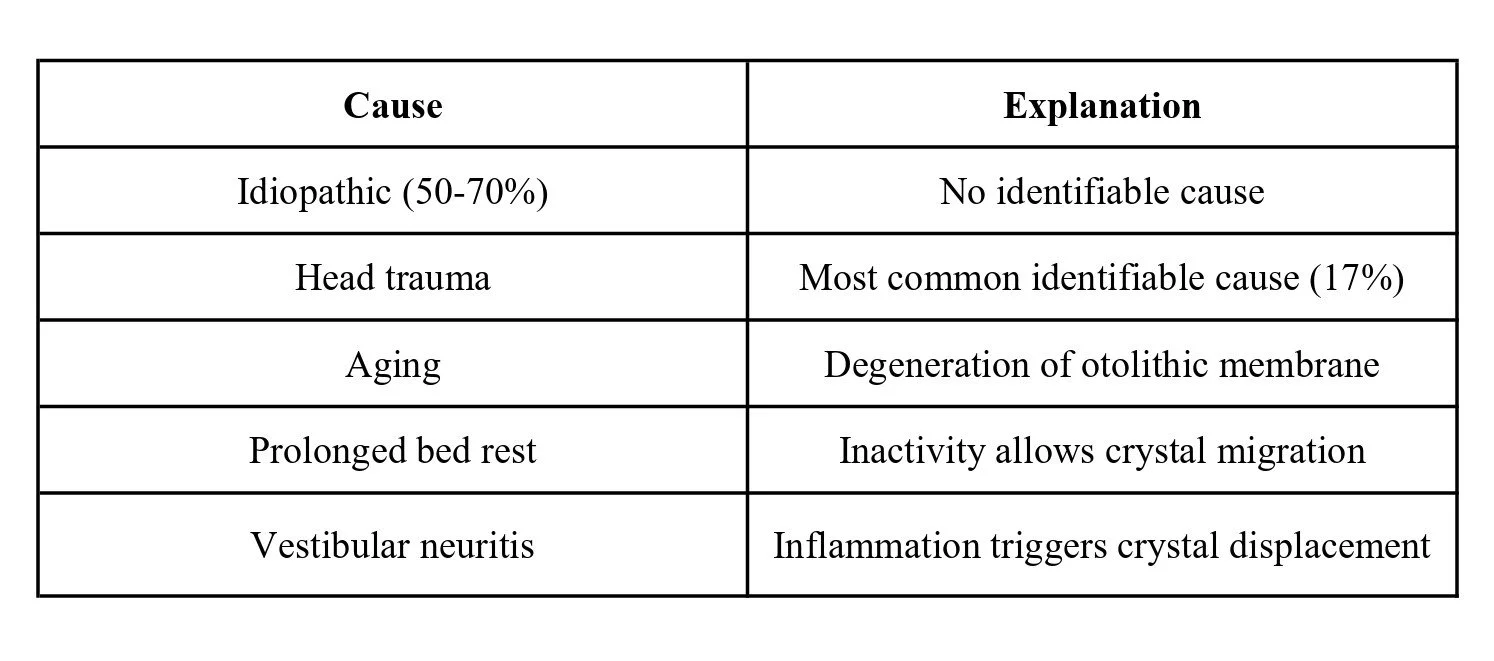
Common Causes & Risk Factors
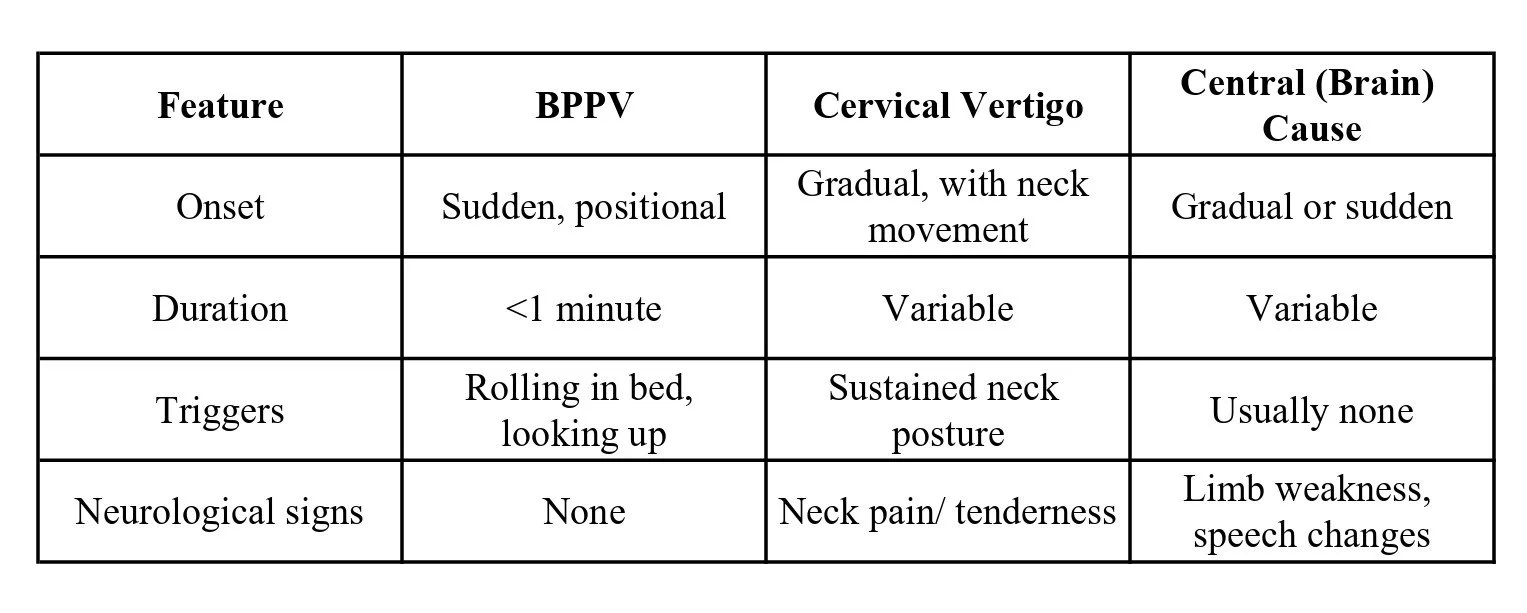
Differentiating BPPV From Other Causes of Dizziness
Red Flag Signs- Seek Emergency Care:
· Sudden vertigo with double vision, slurred speech, or limb weakness (possible stroke)
· New severe headache with dizziness
· Neurological deficits (facial droop, difficulty walking)
Q&A: Common BPPV Questions Answered
Q: Is BPPV dangerous?

A: No. BPPV is benign- meaning it is not life threatening. However, it significantly increases fall risk, with studies showing a 3-4 times higher risk of falls in older adults.
Q: Can BPPV go away on its own?
A: Spontaneous resolution occurs in 20-30% of patients within 1-2 weeks. However, canalith repositioning maneuvers achieve 80-95% resolution after 1-3 sessions – much faster, more reliable and quicker recovery.
Q: Why does rolling over in bed trigger my vertigo?
A: The posterior semicircular canal is positioned so that when you roll over, gravity causes dislodged crystals to move within the canal, creating a “fluid wave” that tricks your brain into thinking you are spinning.
Q: How is BPPV diagnosed?
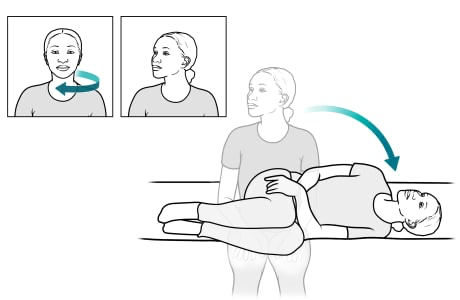
A: The gold standard is the Dix-Hallpike maneuver. This is a specific head and body positioning test. A positive test reproduces vertigo and characteristic nystagmus (eye movements) confirming the diagnosis.
Our Physiotherapy Approach to BPPV
Step 1: Accurate Diagnosis
· History of onset, triggers, duration, fall history
· Dix-Hallpike maneuver (posterior canal)
· Supine roll test (horizontal canal)
· Neurological screening to rule out central causes
Step 2: Canalith Repositioning Maneuvers
· Have a 80-90% success rate of complete resolution and cure with specialized Physiotherapy care
Step 3: Post- Maneuver Instructions
· Avoid rapid head movements for 24-48 hours
· Sleep with head elevated at 30-45 degrees
· Avoid lying flat or on affected side for 2-7 days
Step 4: Home Exercise Program (If indicated)
· Brandt-Daroff exercises for habituation (desentising exercises)
· Self-administered maneuvers for recurrent cases
· Balance retraining for residual unsteadiness
Key Takeaways:
1. BPPV is the most common cause of vertigo – affecting up to 50% of older adults.
2. BPPV is mechanical, not neurological. Caused by dislodged crystals, not a brain problem.
3. The Dix-Hallpike test is the gold standard for diagnosis.
4. Physiotherapy treatment with Canalith repositioning maneuvers are highly effective – 85-95% success after 1-3 sessions.
5. BPPV significantly increases fall risk – treatment reduces this risk dramatically.
6. Recurrence is common (30-50% within 5 years) but manageable.